
Wednesday, June 10, 2020
#BlackLivesMatter
#BlackLivesMatter each and every day. For so long, Black people in the United States and throughout the rest of the world have been the brunt of policies and systems designed to negatively impact us through financial, political, and social means. This is systemic and change has been due, but has not come fast enough. I’m extremely proud of those stepping up and out by protesting, donating their time and money, and organizing within their respective communities. Slowly, but surely, we will make a change!
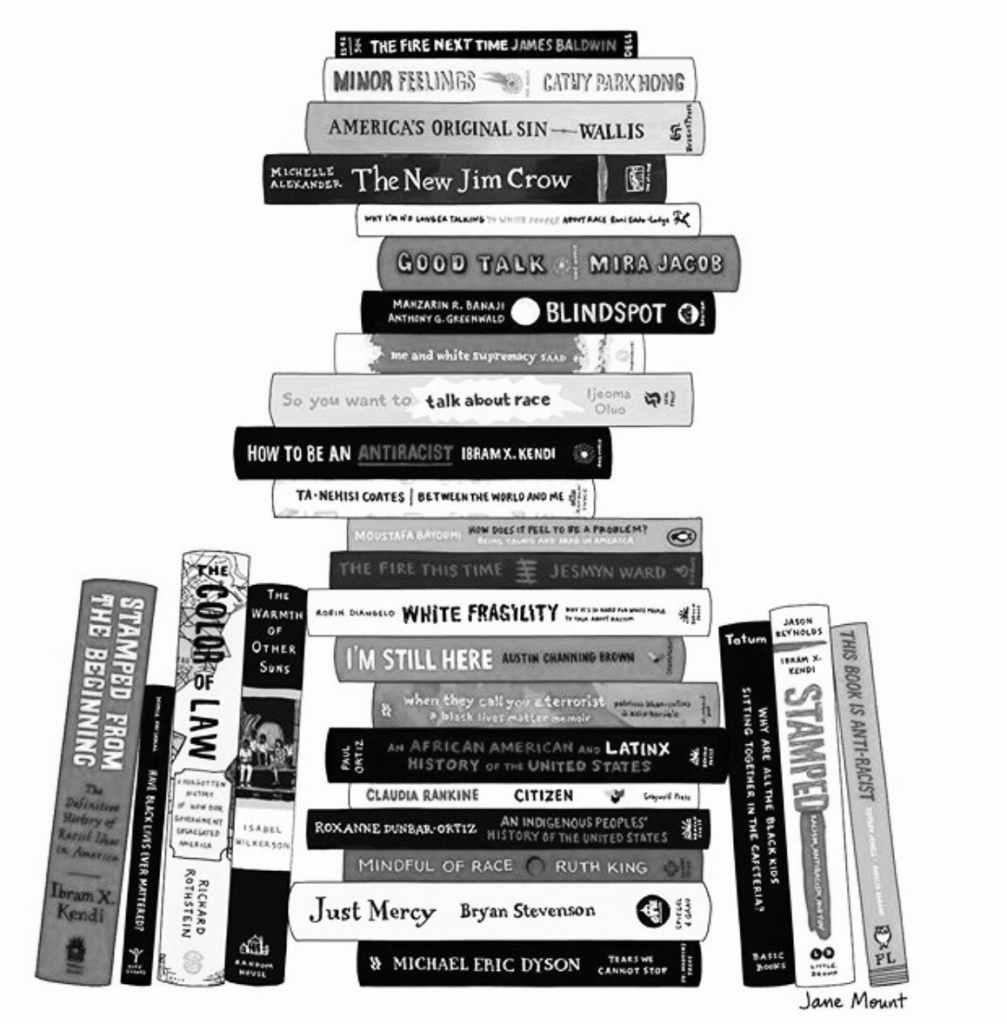
Over the past month, the weight of this movement has weighed heavily on my mind. I’ve been extremely active on social media and within my department working to enact change and speak up about the injustices Black people face throughout our daily lives. For this blog post, I’ve compiled a list of resources both in and out of academia to help you support social movements and educate yourself on the history of structural racism and anti-Blackness in the United States.
Please take the time to go through these resources and visit any of them that may be useful to you!
You can’t play ignorance, justified by feeling uncomfortable, when Black people have been made to feel uncomfortable their entire lives in a white privileged, systematically racist and unfair society that is more than happy to benefit from Black culture, but isn’t so happy in adhering to the ideals of equality and basic human rights.
Jade Thirwall
Cornell Resources
These resources are specific to Cornell, but they may be helpful to all graduate students irrespective of your institution.
- Cornell Graduate School Resources: http://gradschool.cornell.edu/resources
- Cornell Caring Community: https://caringcommunity.cornell.edu/get-help/
- Cornell Health Counseling Services (for students): https://health.cornell.edu/services/counseling-psychiatry
- Cornell Faculty & Staff Assistance Program (for postdocs): https://fsap.cornell.edu/
- Bias Reporting: https://diversity.cornell.edu/our-commitments/bias-reporting-cornell
- Anti-racism Resources from the Office for Faculty Development and Diversity
Academic Efforts and Resources
Resources for those looking to engage and learn more through an academic context. A big thank you to the #ShutdownAcademia movement for compiling a lot of these resources.
- #ShutdownAcademia #ShutdownSTEM
- How does anti-Black racism show up in academia?
- Already done some reading about race and want to learn more?
- Cognitive Reserve and Racial Privilege in STEM
- Resources compiled by Particles for Justice as part of the #Strike4BlackLives
- Anti-racism resources for white people, compiled by Sarah Sophie Flicker & Alyssa Klein
- A US/Canadian Race and Racism Reading List, by Prof. Chanda Prescod-Weinstein
- Shareable Anti-Racism Resource Guide
- BlackLight, a compilation about the Black experience in the US, co-curated by Brian Nord, Lauren Biron, Renée Hložek, & Lucianne Walkowicz. New content is added every year during Black History Month.
- Equal Opportunity Astronomy: Articles & Resources by Astrobetter
- A learning list on race in America, by Lauren M. Chambers
- Justice in June
- Teaching Tolerance
- Racial Equity Tools
Academic/Professional Organizations and Initiatives
- American Association of Black in Energy
- Association of Black Psychologists
- BlackAFinSTEM
- BlackAndSTEM
- Blacks in Technology
- The Institute for African-American Mentoring in Computing Sciences (iAAMCS)
- National Black Justice Coalition
- National Action Council for Minorities in Engineering
- National Council of Negro Women
- National Coalition of Black Women
- National Organization for the Professional Advancement of Black Chemists and Chemical Engineers
- National Science and Technology News
- National Society of Black Engineers
- National Society of Blacks in Computing
- National Society of Black Physicists
- National Association of Black Geoscientists
- Society of Black Academic Surgeons
- VanguardSTEM
Political and Legal Resources
For those interested in writing to legislators and participating in protesting efforts.
- Template for writing to legislators on police brutality
- Identify your state representatives
- Register to vote (or check your registration)
- Document on how to protest safely
Petitions
Petitions are important ways to make your voice heard and lend support to the creation of policies.
- Breonna Taylor Petition
- #WeCantBreathe Petition
- Justice for George Floyd Petition
- Color of Change Petition
- We Are Done Dying Petition
Fundraising Efforts
Funds to support recent victims and protests throughout the country.
- Official GoFundMe for George Floyd
- Black Vision Collective for Black, Trans, and Queer folks in Minnesota
- Minnesota Freedom Fund pays for the bonds for those jailed especially those that are protestors
- Ahmaud Arbery Fund organized by CPAC
- Louisville, Kentucky Bail Fund for protestors of Breonna Taylor
- Missouri Black Protester Relief Fund
- Black Voters Matter Fund
- Free Them All
- Black Lives Matter
- NAACP’s Legal Defense and Educational Fund
Organizations
Learn more about organizations fighting for inequality and support them!
Podcasts
- ‘1619,’ a A Podcast from the New York Times
- About Race
- Code Switch (NPR)
- Intersectionality Matters! hosted by Kimberlé
- Momentum: A Race Forward Podcast
- Pod for the Cause (from the Leadership Conference on Civil & Human Rights)
- Pod Save the People (Crooked Media)
- Seeing White
Thanks for reading! You can catch up on my previous posts here. Feel free to share this post and follow me on all social media platforms @CollegeSista! Have questions about applying to grad school, life as a graduate student, or Cornell in particular? You’re welcome to contact me on LinkedIn or through email!

Wednesday, April 29, 2020
Note: Quarantine Check-in
Hey everyone! April is almost over and May (one of my favorite months of the year) is creeping up on us. With the school year winding down, course projects winding up, and still trying to be productive in the midst of a pandemic, things are somewhat hectic for me. I’ve been doing my best to manage my academic, personal, and extracurricular commitments in this new environment but a lot of it is just overwhelming. On the average day, I have around three Zoom/Hangout/Meet/Skype calls and sometimes have had up to five! Yesterday, I was on two Zoom meetings at the same time :O
Everyone is “hustling” or “taking advantage” of the time they gained from now staying at home, but this hasn’t been the same for everyone, especially us grad students. There’s so much diversity within the grad student population from age, to marital status, to being parents and it can be hard to imagine how the “average” grad student is coping. I’m fortunate that I can get my work done from anywhere in the world as long as I have a secure Internet connection. I definitely feel for those who have been cut off from their labwork and have now been forced to figure out a way to advance their research from home. One of my good friends is an Animal Science PhD student and her calf trials have been suspended for the time being, which I’m sure is extremely frustrating!
In the midst of chaos, there is also opportunity.
Sun Tsu
I saw this quote floating around and found it to be extremely insightful. When thinking further about it, I realized that the emphasis was not on the opportunity for you to produce but on the opportunity to focus within and work on yourself.
Overall, I’m proud of Cornell’s response to the sudden shutdown and how they have allocated resources to students all across campus. I acknowledge that not many universities have the resources that Cornell does and I am forever grateful to be supported by an institution like this! Many grad students are worried about the new timeline shift of their academic milestones and I’m definitely in this boat as well. I was planning to do field research in India this summer, but now it’s unknown if I can even go. I’m fortunate to have supportive advisors and a department that is receptive to their student needs, so my worries about this have been somewhat quelled. I would love to know what new activities you’ve partook in since quarantine started and how your institution has supported you during this time. Feel free to comment below and share your experiences!

Many universities have posted resource websites for their graduate students. If you’re looking for more tips to stay motivated during this time, check out Cornell Graduate School’s website! Be sure to take care of yourself and remember that we’ll get through this with time (and with an effective government response)!
Thanks for reading! You can catch up on my previous posts here. Feel free to share this post and follow me on all social media platforms @CollegeSista! Have questions about applying to grad school, life as a graduate student, or Cornell in particular? You’re welcome to contact me on LinkedIn or through email!

Wednesday, April 1, 2020
Blog Update: Let’s catch up!
I’ve been AWOL for the past few months, so thank you to everyone who has continued to follow and share my content! With the COVID 19 crisis occurring and personal life taking over, I haven’t been as active on my blog as I’ve wanted to be. Being in grad school and navigating its complexities can be a slippery slope, so I’ve been doing my best to stay strong and take care of my emotional and physical health during this time.
I’m sure you all want an update, so here are some things I’ve been up to since the beginning of the year:
- I traveled to Nigeria and Ghana for some personal travel and to give back through service learning trips! I’m planning on writing more about my trip soon.
- Got more in-depth with my research plans and started some new collaborations!
- I joined Cornell Healthcare Review as a writer!
- Spoke at a roundtable session and presented a talk virtually!
- Getting back to reading! I’ve read almost 15 books since the start of this year and haven’t been slowing down. I even finished 3 books in one week!
- Got accepted to the blackcomputeHER Fellows program and received an Honorable Mention from two prestigious fellowships.
- I updated my academic website!
I have a lot of content prepared to post, but want to be sensitive to your needs at this time. What kind of content are you looking to see?
Some things I have in mind are staying consistent through personal and global crises, completing your work virtually, and managing your finances as a grad student. With tax season already here, I was planning on focusing on budgeting, saving, and tax topics but I definitely want to hear your thoughts!
Many schools have posted resource websites for their graduate students. If you’re looking for more tips to stay motivated during this time, check out Cornell Graduate School’s website! Be sure to take care of yourself!
Thanks for reading! You can catch up on my previous posts here. Feel free to share this post and follow me on all social media platforms @CollegeSista! Have questions about applying to grad school, life as a graduate student, or Cornell in particular? You’re welcome to contact me on LinkedIn or through email!

Monday, December 2, 2019
Organizing Your Fellowship Applications
It’s now December and fellowship application season is picking up pretty quickly! I have a couple of deadlines within the next month and wanted to share my process for applying to fellowships. In my previous post, I detailed why you should apply to fellowships and provided some resources that you can use to apply to some. In this post, I’ll be talking about how I organize my applications and how I prepare my research and personal statements.
For those who need a quick refresher, here is a short list of the main things you need to apply to fellowships:
- List of fellowships you are applying to
- Personal and research statements
- List of potential recommenders
Consistency across your applications is very important! I realized that I was forgetting a lot of the awards and honors I received during undergrad and this may have impacted my previous applications in ways I don’t even know. Now, to keep on top of everything, anytime I get a new job, award, or volunteer experience, I add it to one of my various lists to ensure that I won’t forget it! Not only does this help with consistency, but I am able to keep my LinkedIn and CV updated more often. This also helps when recommenders ask for more information to provide in their respective letters!
Here are examples of some of the documents names I use to organize all of my work and internship experiences, presentations, research, volunteering, and awards/honors:
- Application Plan
- This document is basically a summary of an article I read on ProFellow. I just tailored the timeline to match my own schedule and voila!
- Impact of Research + Keywords
- A lot of fellowships will ask what impact your research has and ask for you to provide keywords relevant to your research. I thought it would be great to write this out in its own separate document so I could explain everything more clearly.
- Research Summary
- Sometimes different fellowships require varying word counts, so I have 500, 750, and 1000-word versions of my research summary in this document.
- List of Awards
- Very simple! I keep track of all my past awards (undergrad and up) and write down present ones as they come in.
- Teaching Experience
- This document hosts all of my Teaching Assistant experiences plus other experiences where I led workshops or collaborative learning sessions.
- Research Experiences + Presentations/Publications
- In this document, l keep track of my undergraduate and graduate research experiences plus poster/oral presentations and publications (coming soon!).
- Volunteer Experiences & Science Outreach
- Again, a pretty simple document! I keep track of volunteering I do such as speaking on panels, organizing workshops, etc. I also keep track of executive board positions I have in student organizations.
In addition to these files, I also keep track of the fellowship names and application/recommendation deadlines. I also use Google Tasks to send me reminders, which is extremely helpful because it integrates with Google Calendar. I hope this article was helpful and I am sure that implementing some of these tips will definitely help you craft the best fellowship applications! If you have any questions about how I format these respective documents, feel free to leave any suggestions or comments and I’ll incorporate them in future blog posts. Thank you for reading and good luck on your fellowship applications — you got this!
Be sure to catch up on my Grad School Series by reading my previous posts here. Feel free to share this post and follow me on all social media platforms @CollegeSista! Have questions about applying to grad school, life as a graduate student, or Cornell in particular? Feel free to contact me on LinkedIn or through email!